Engineering, taught inside your institution.
A structured coding, robotics and AI programme delivered on your campus — two school bands from Grade 6 upward, and semester-aligned cohorts for colleges. Instructors, curriculum, kits and reporting included.
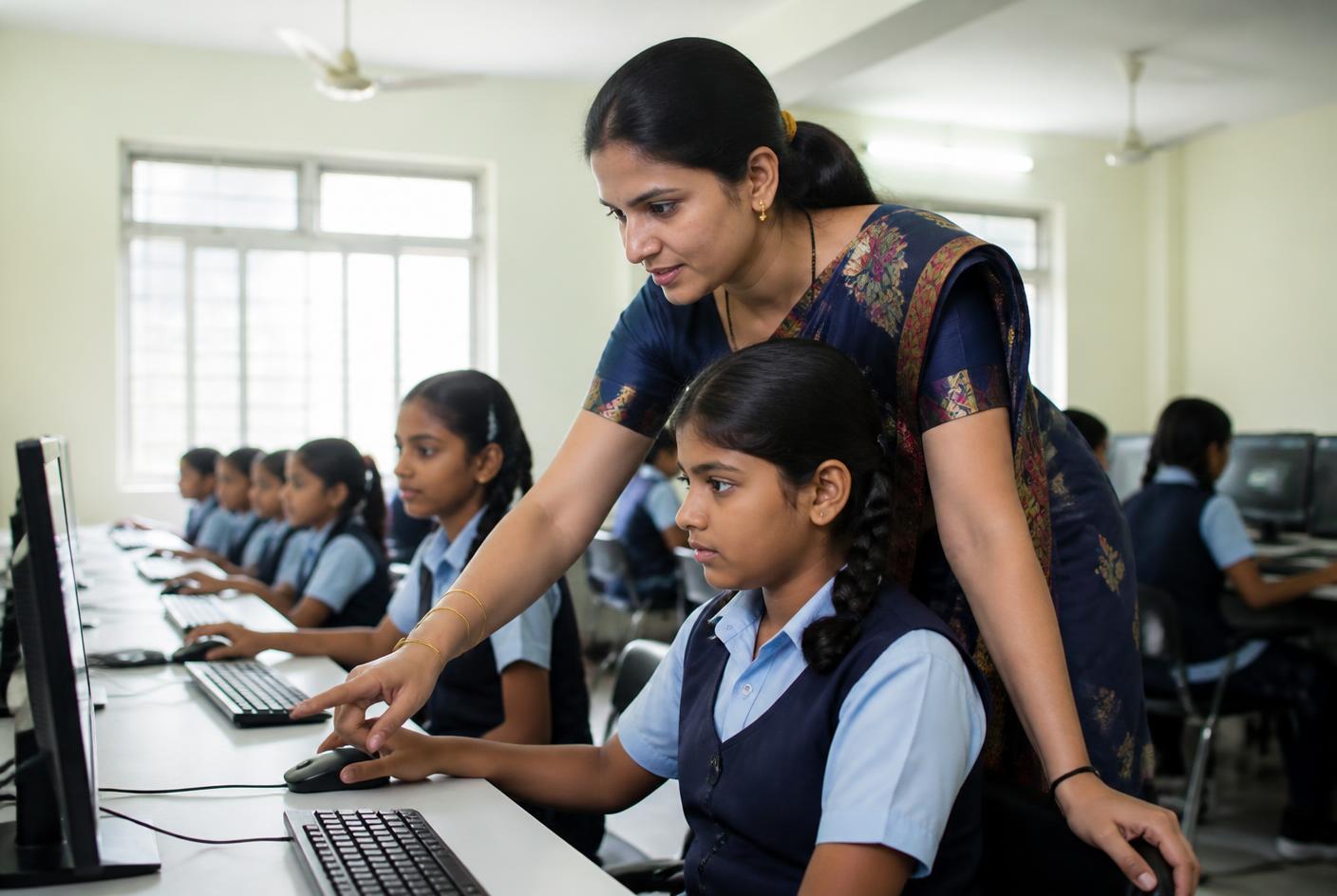

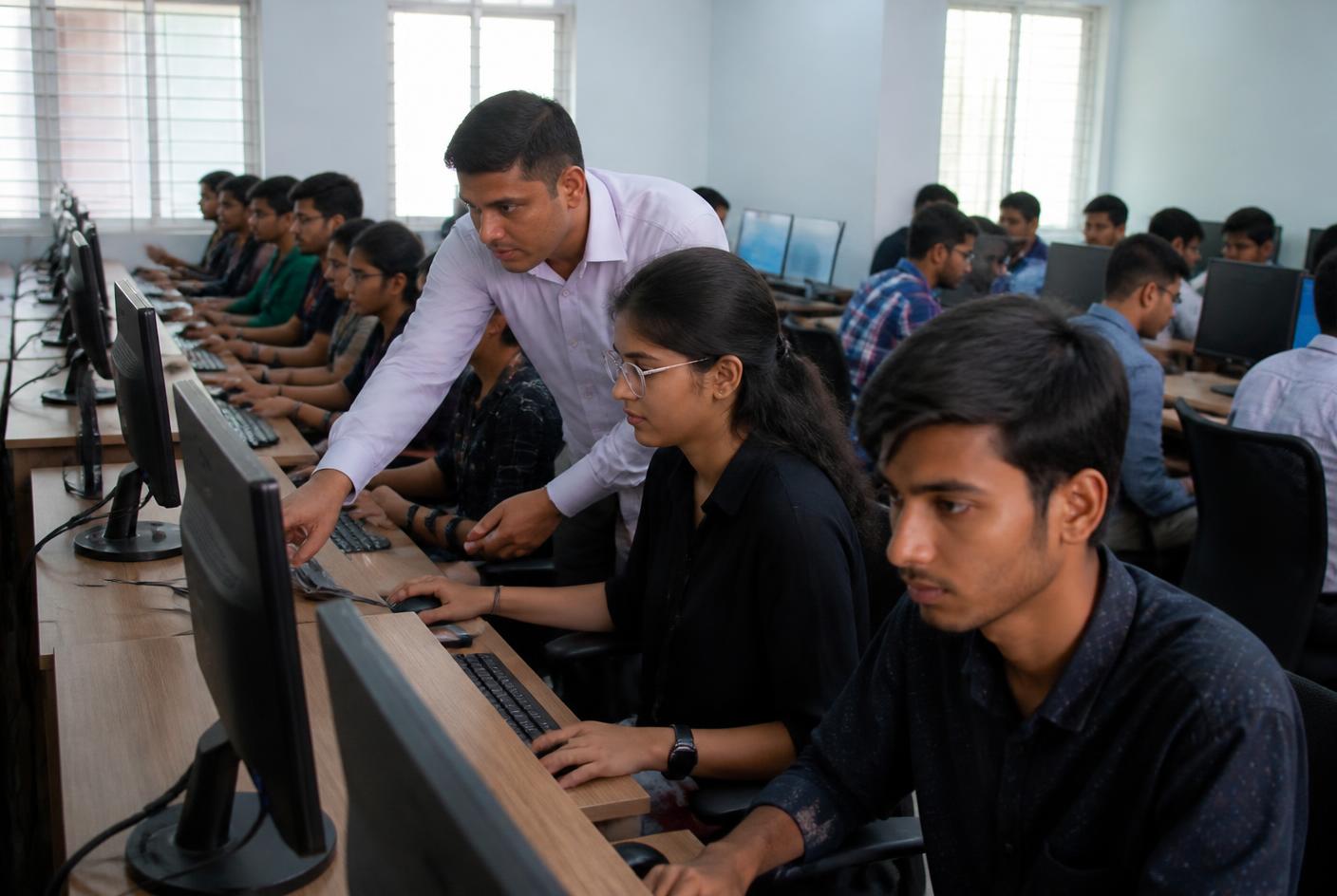
Two school bands. One college track.
Each track has a fixed class cadence so your academic calendar stays predictable from day one.
Band 1 · Schools
Grade 6 to Grade 82 classes per batch, per week
Holiday weeks excluded from the timetable
Computational thinking, block-to-code transition and a built project every term — slotted into the school week.
- Scratch to typed code
- Web basics & design thinking
- Term-end showcase project
Band 2 · Schools
Grade 9 to Grade 12100 classes per academic year
Scheduled around your board calendar
Python, robotics, IoT and applied AI — taught as a full-year engineering sequence with a judged capstone.
- Python & data literacy
- Robotics, sensors, IoT
- AI foundations + capstone
Colleges
Diploma, UG & PG cohorts50 classes per semester
Credit-mappable, semester-aligned delivery
Industry-aligned AI, cloud and full-stack modules delivered on your campus, with internships and placement prep.
- AI / Cloud / Full-stack tracks
- Live industry projects
- Interview & internship prep
3
Delivery tracks
Two school bands + colleges
100
Classes per year
Band 2 full-year sequence
50
Classes per semester
College cohorts
1:20
Instructor ratio
Plus a teaching assistant
We bring the programme. You keep the calendar.
Everything from instructors to kits to reporting is handled by our team, inside the schedule your institution already runs on.
Small, teachable batches
A trained instructor plus a teaching assistant per batch, so quiet learners get heard and fast learners get stretched.
1 : 20 batch ratioFits your timetable
Sessions slot into your existing periods or lab hours — holiday weeks and exam blocks are worked around, not through.
Zero calendar clashesLabs, kits and setup
Hardware kits, lab configuration and software access are set up by our team before the first class runs.
Ready before day 1Reporting for instructors
Term-wise progress reports, attendance, project portfolios and outcome dashboards shared with your academic team.
Termly reporting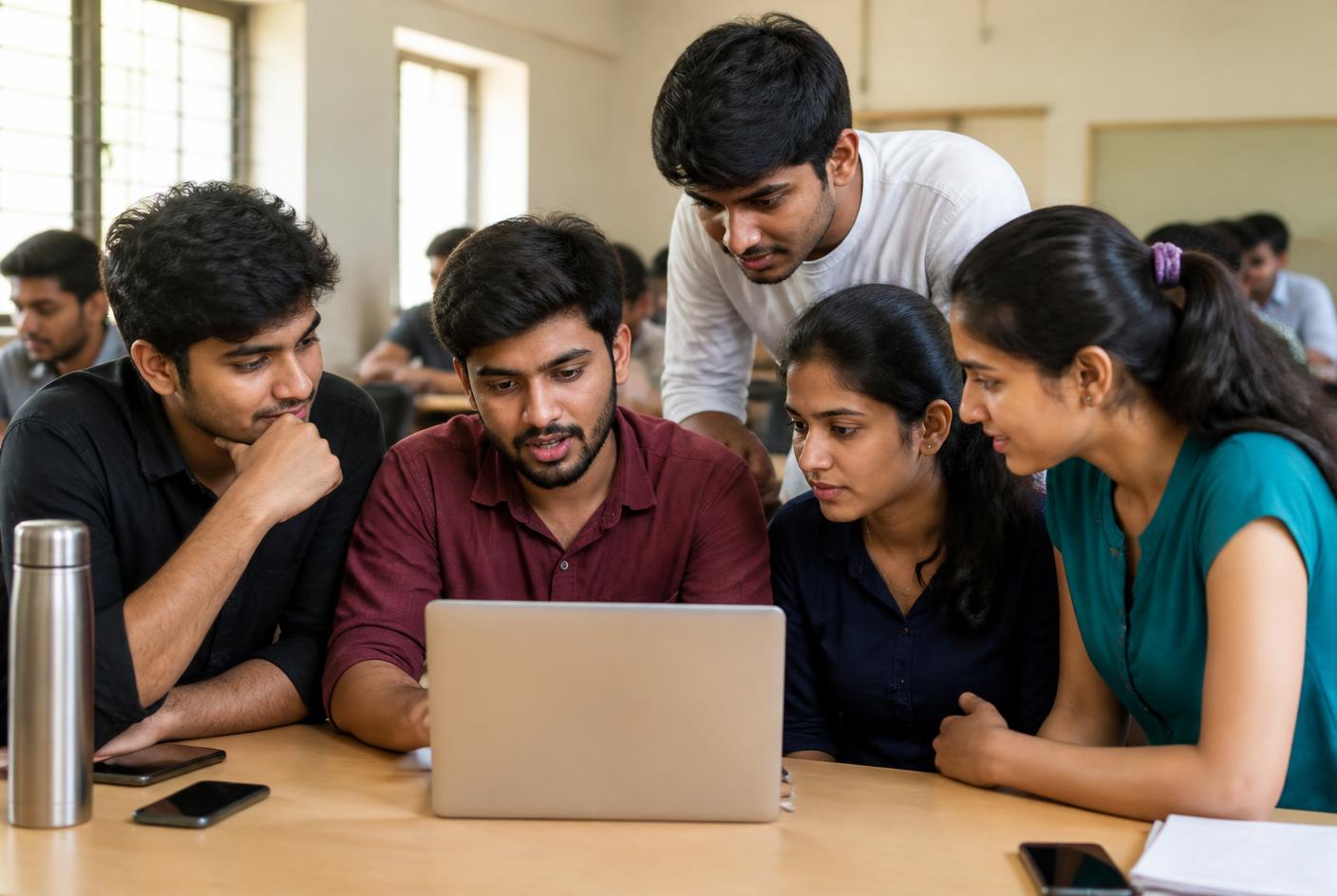
Taught in your own classrooms
No student travel, no separate infrastructure. Our instructors arrive, teach and report — your instructors stay in the loop throughout.
From first call to first class.
A five-step onboarding that typically completes in three to four weeks.
Discovery call
We map your grades, timetable, lab capacity and academic goals in a 30-minute call with your leadership team.
Pilot session
A live demo class with a real batch of your students, so instructors can see the pedagogy before committing.
Delivery plan
A written plan: batch sizes, class cadence, kit list, instructor roster and the term-by-term scope & sequence.
Setup & onboarding
Lab configuration, kit delivery, student accounts and a teacher-enablement workshop before the first class.
Run & review
Classes run on your calendar with monthly check-ins, attendance dashboards and a term-end showcase.
Support that stays after the class ends.
Teacher enablement
Your instructors co-deliver from term two with our training workshops, lesson plans and classroom playbooks.
Assessment framework
Rubric-based grading for projects, plus periodic skill checks that map cleanly to your internal marking scheme.
Student learning platform
Every student gets a login with lessons, practice problems, submissions and an auto-built project portfolio.
Kits & lab support
Robotics and electronics kits, spares, and on-call technical support so no class is lost to setup issues.
What students finish with.
Catch-the-star game
First game with score, collisions and win states — built by 7-year-olds.
Scratch · Design thinking
Line-following rover
Sensor-driven robot built, printed and raced in the classroom challenge.
Arduino · Sensors · Tinkercad
Study-buddy AI app
Teen-built revision assistant with safe prompts and fact-checking built in.
Python · LLM API · Streamlit
What each track covers.
Band 1 · Grade 6–8
- Computational thinking
- Scratch to typed code
- HTML, CSS & design basics
- Term showcase project
Band 2 · Grade 9–12
- Python programming
- Data literacy & charts
- Robotics, sensors, IoT
- Applied AI + judged capstone
Colleges
- AI engineering foundations
- Future Engineering practice
- Full-stack build sprints
- Internship & interview prep
“He used to ask for one more level. Now he asks for one more feature. The demo day was the first time I saw him explain something technical to a room.”
Sushma R.
Parent · Grade 5 learner
Institution questions.
Our trained instructors teach on your campus, alongside your instructors. We also run teacher-enablement sessions so your staff can co-deliver over time.
Run one pilot batch. Then decide.
We'll run a demo session with your students and share a delivery plan mapped to your academic calendar.